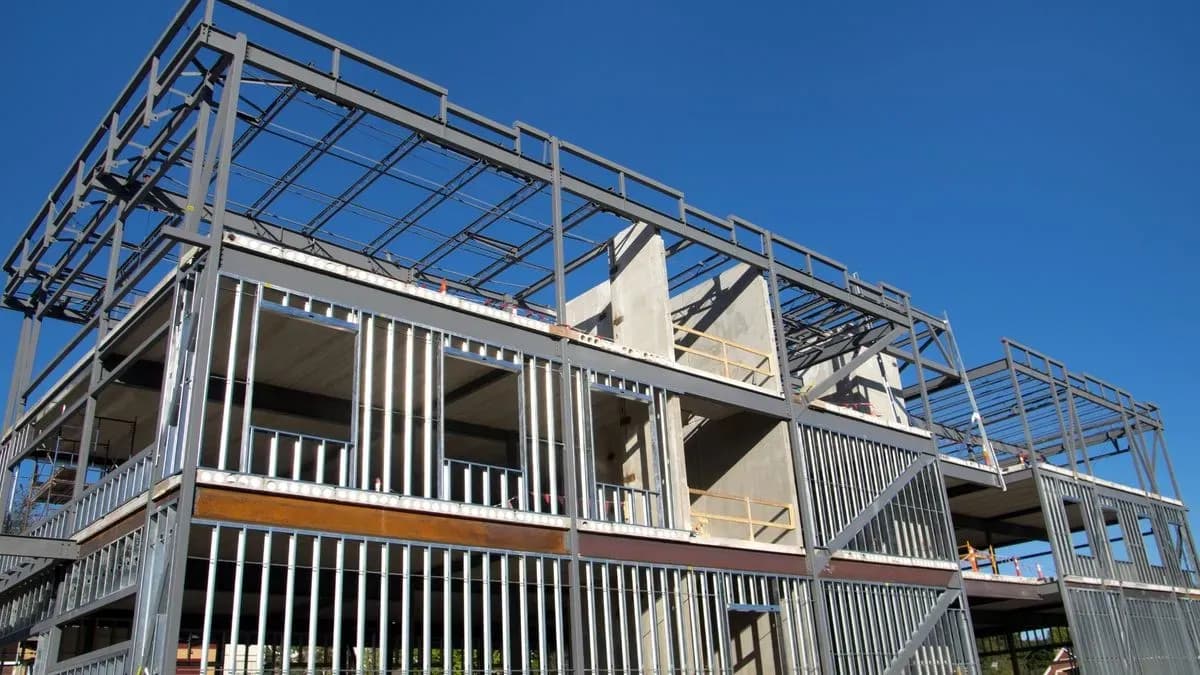
Planning a commercial construction project in Leicester? From planning applications to CDM compliance, here's what business owners need to know.
Commercial construction projects in Leicester present different challenges and requirements to residential work. Whether you're planning a new office building, a retail unit fit-out, a warehouse extension, or a hospitality premises, understanding the regulatory environment and selecting the right contractor are critical to a successful outcome.
Unlike residential permitted development, virtually all commercial construction and change of use projects require full planning permission. The planning application process for commercial developments involves a pre-application discussion with Leicester City Council or the relevant Leicestershire district council, submission of detailed drawings and supporting documents, and a determination period of typically 8–13 weeks. For more complex or large-scale developments, this process can take longer. Engaging a planning consultant or architect with experience in commercial applications significantly improves your chances of a smooth and swift approval.
The Construction (Design and Management) Regulations 2015 — known as CDM 2015 — apply to the majority of commercial construction projects. These regulations impose duties on project clients, designers, and contractors to manage health and safety throughout the project lifecycle. As a commercial client, you have specific legal duties under CDM, including appointing a Principal Designer and Principal Contractor if the project involves more than one contractor. Your chosen contractor should be able to advise you clearly on your CDM duties and fulfil the role of Principal Contractor on your behalf.
When selecting a commercial contractor in Leicester, prioritise demonstrable experience in your specific sector. Commercial work in retail, office, industrial, and hospitality environments each has its own technical requirements, programme pressures, and budget sensitivities. Ask for case studies of recent comparable projects, and visit completed projects where possible.
Consider whether a design-and-build contract suits your project. Under this arrangement, the contractor takes responsibility for both the design and the construction, giving you a single point of contact and — critically — a single point of accountability if things go wrong. Design-and-build also tends to deliver faster programme delivery than traditional procure-then-build approaches. The trade-off is that you have less direct control over the design process.
For business owners concerned about operational disruption, phased construction programmes can allow work to proceed around your business. This requires careful joint planning and sequencing — your contractor should present a detailed phase plan showing exactly which areas will be affected at each stage and how access and egress will be maintained throughout.
Key Takeaways
- Commercial projects almost always require full planning permission
- CDM 2015 regulations apply to most commercial construction projects
- Choose a contractor with demonstrable commercial sector experience
- Design-and-build contracts offer cost certainty and single-point accountability
- Phased builds minimise disruption to ongoing business operations